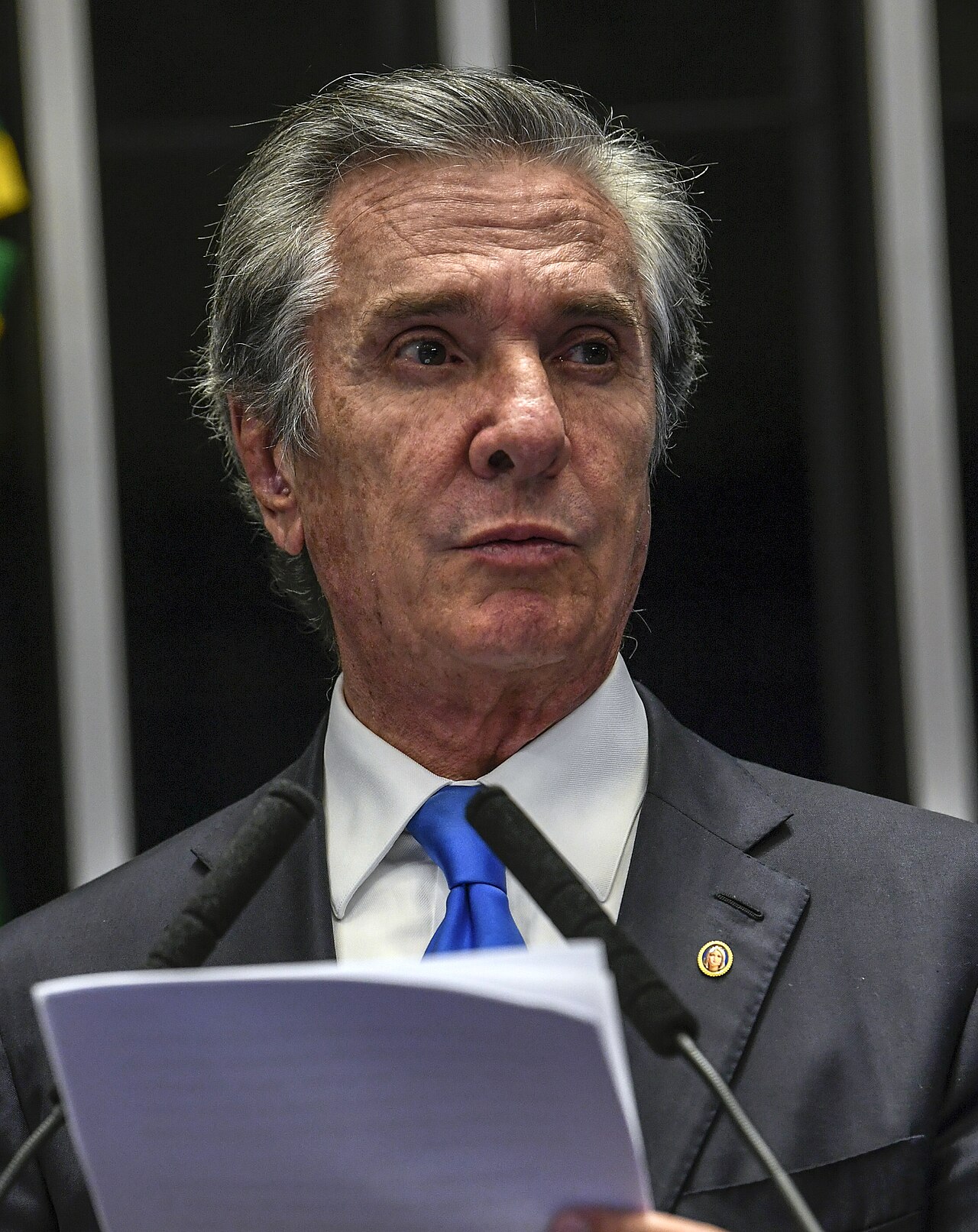
Fernando Collor de Mello
Brazilian president who resigned amid impeachment and was later convicted.

Senado Federal · CC BY 2.0
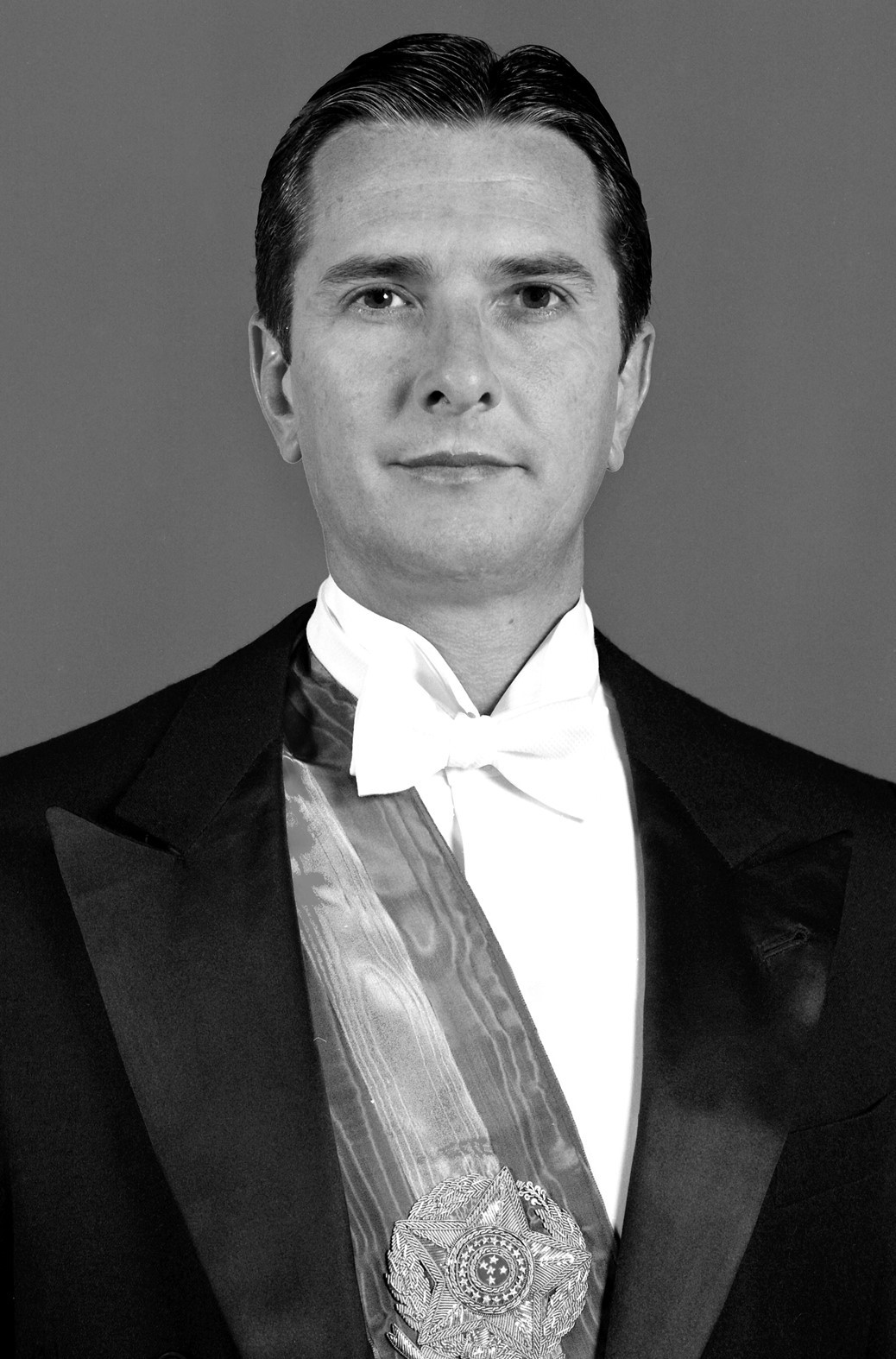
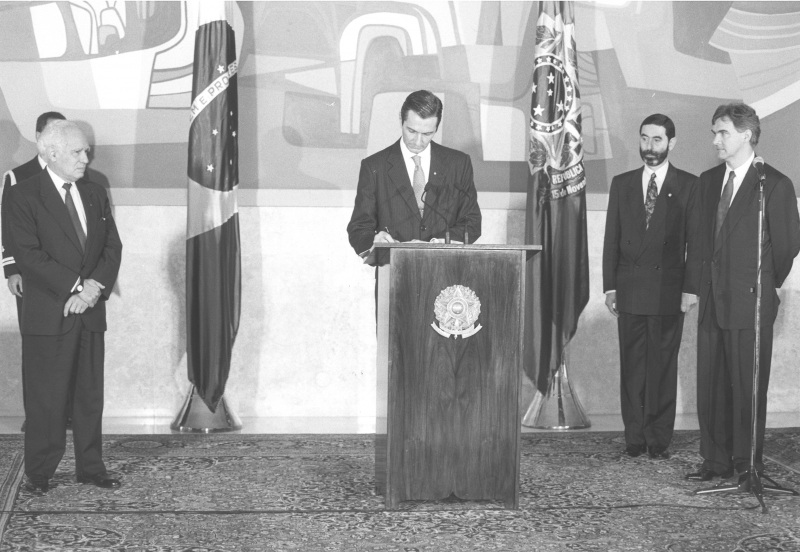
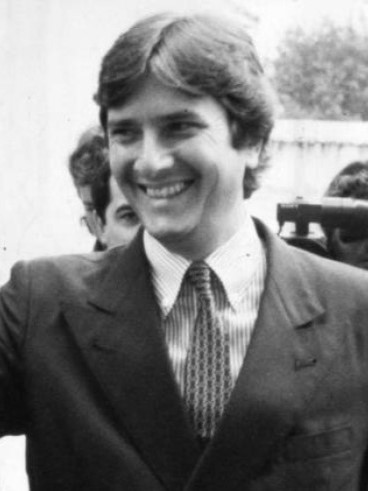
Fernando Affonso Collor de Mello (born 12 August 1949) is a Brazilian politician who served as the 32nd president of Brazil from 1990 to 1992. He was the first democratically elected president after the Brazilian military dictatorship and the youngest to take office, at age 40. His presidency ended with his resignation amid impeachment proceedings, and he was later convicted by the Senate and disqualified from holding elected office for eight years.
- born
- 12 August 1949
- field
- Politics
- nationality
- Brazilian
- known_for
- First democratically elected president after military dictatorship; youngest president in Brazilian history; resigned during impeachment trial
Lore & Background
Fernando Collor was born into a political family in Rio de Janeiro, the son of former Senator Arnon Affonso de Farias Mello and Leda Collor. He graduated in economic sciences in 1972 from the Federal University of Alagoas and became president of the family newspaper Gazeta de Alagoas. He served as mayor of Maceió, federal deputy, and governor of Alagoas, gaining national attention for challenging high public servant salaries, whom he called 'marajás' (maharajas).
Reader's Guide
Collor's presidency was marked by the Collor Plan, a national privatization program, and opening the domestic market to imports. The plan initially received support but deepened economic recession, eliminating over 920,000 jobs in 1990. Allegations of corruption involving his treasurer, Paulo César Farias, led to impeachment proceedings. Collor resigned on 29 December 1992, hours before the Senate convicted him for crimes of responsibility, disqualifying him from office for eight years. He later served as Senator for Alagoas from 2007 to 2023. In 2025, he was arrested after being accused of receiving bribes from a Petrobras subsidiary. His legacy remains controversial, as he was both a reformer and a figure convicted of corruption.
Did You Know?
- Collor was the first president democratically elected after the Brazilian military dictatorship.
- He became the youngest president in Brazilian history, taking office at age 40.
- He signed the Treaty of Asunción in 1991, founding the Southern Common Market (Mercosur).
- In 2025, he was arrested by the Brazilian Federal Police after the Supreme Court ordered his imprisonment.
Academic Roots and the Path to Public Service
Zélia Maria Cardoso de Mello was born on September 20, 1953, in São Paulo, and her intellectual formation took place almost entirely within the walls of the University of São Paulo. She earned both her undergraduate degree and her doctorate in economics from the FEA, the university's School of Business and Economics, and she went on to spend nearly two decades teaching there as a professor. This long academic tenure gave her deep familiarity with Brazilian economic theory before she ever stepped into a government office. Her professional life spanned the academic, public, and private sectors, a versatility that would later serve her well in policy. The turning point toward politics came in 1986, when Dilson Funaro, then serving as Brazil's Minister of Finance, extended an invitation for her to join his Economic Advisory Team. She accepted the role of Director of the National Treasury Department, marking the beginning of a political trajectory that would place her at the center of the country's most ambitious economic experiment in decades.
Architect of the Plano Collor
When Fernando Collor de Mello took the presidency in 1990, Cardoso de Mello was appointed as National Minister of Economy, Finance, and Planning, and she became the driving force behind the Plano Collor. The plan married a monetarist approach to inflation stabilization with sweeping trade and industrial reforms. Two pillars stood out: the PICE, an industrial and foreign trade policy designed to expose Brazilian businesses to international competition while encouraging homegrown innovation, and the PND, Brazil's first large-scale privatization drive. The PND alone transferred eighteen state-owned enterprises to private hands and generated close to four billion dollars for the federal treasury. According to economist Carlos Eduardo Carvalho, the plan's architecture was largely shaped by Collor's advisors in the final days of December 1989, after his runoff victory. Notably, the liquidity-blocking mechanism at the plan's core had roots in academic debate and was later imposed on competing presidential candidacies, including those of PMDB's Ulysses Guimarães and PT's Luiz Inácio Lula da Silva, none of whom had developed their own stabilization strategies amid the hyperinflation crisis of late 1989.
The Bésame Mucho Scandal
In 1990, Cardoso de Mello's tenure as minister was overshadowed by a personal scandal that became one of the most talked-about episodes of the Collor administration. She had an affair with Bernardo Cabral, the sitting Minister of Justice, a married man with three children. The relationship came to light in a dramatic public moment: at a birthday party hosted for Zélia, the two were seen dancing cheek to cheek to the song Bésame Mucho. The spectacle forced Cabral to resign from his cabinet post. The embarrassment did not end there. Days later, at a formal ceremony, the regimental band of the presidential guard, known as Os Dragões da Independência, chose to introduce Cardoso de Mello with the same romantic waltz rather than the customary military march. The band's musical director, Lieutenant Geraldo Mendonça da Lima, was punished with three days of detention for insubordination. The scandal generated intense public criticism of Cardoso de Mello, and the mounting pressure ultimately contributed to her resignation from the ministerial post in May 1991.
A New Life in New York
After leaving the cabinet, Cardoso de Mello's personal and professional life took a series of unexpected turns. In 1991 she published a memoir titled Zelia, A Passion, which became a best-seller. One reviewer captured its tone with wry humor, noting that the book says little about tax reform and inflation but a great deal about Cardoso's sexual exploits in office. She later married the beloved Brazilian comedian Chico Anysio; the couple had two children, Rodrigo and Victoria, before their divorce in 1998. Professionally, she crossed the Atlantic in 1995, taking a position as a visiting scholar at Columbia University's Institute of Latin America and Iberian Studies in New York City. From 1998 onward, she held executive roles at several major financial advisory firms specializing in Brazilian markets, including Global Access Investments, Orix, and Lily Pond Capital. She currently serves as a partner at Aquila Associates, a New York-based firm. In this way, the woman who once sat at the heart of Brazil's most controversial economic experiment found a second career advising investors on the very country she had once tried to transform.
Gallery

Frequently Asked Questions
Who is Fernando Collor de Mello?
Fernando Collor de Mello is a Brazilian politician born on 12 August 1949 who held the office of the 32nd president of Brazil from 1990 to 1992. He entered the presidency at just 40 years old, making him the youngest person ever to lead the country, and he was the first head of state chosen by popular vote after the end of the military regime.
What were Fernando Collor de Mello's powers as president?
As Brazil's president, he wielded full executive authority, including the power to appoint cabinet ministers, issue decrees, and direct national policy. His role placed him at the head of the federal government, overseeing the military, the judiciary's budget, and foreign relations during his brief tenure.
How does Fernando Collor de Mello's story end?
His presidency collapsed in 1992 when he stepped down before the Chamber of Deputies could complete its impeachment vote. The Senate subsequently found him guilty of crimes of responsibility and barred him from holding any elected position for eight years.
Why is Fernando Collor de Mello important in Latin American history?
He symbolized both the promise and the fragility of Brazil's post-dictatorship democracy, as his election in 1989 was widely seen as a youthful, reformist break from the old political establishment. His dramatic fall from power through impeachment and conviction became a cautionary tale about accountability in the region's newly restored democratic institutions.
What happened during Fernando Collor de Mello's impeachment trial?
Collor resigned his presidency on 29 December 1992, days before the lower house was set to vote on removing him, effectively ending his term. The Senate then proceeded with its own trial and voted to convict him, imposing an eight-year disqualification from public office.
More in Latin American Presidents 1-24
Elsewhere in the Latin American Presidents universe
Spotted an error? Know more?
This is a living reference — every entry is fact-audited, and reader corrections feed straight into our audit queue. Suggest an edit · See this site's audit record