Felipe Calderón
Mexican president who launched a drug war and faced a disputed election.

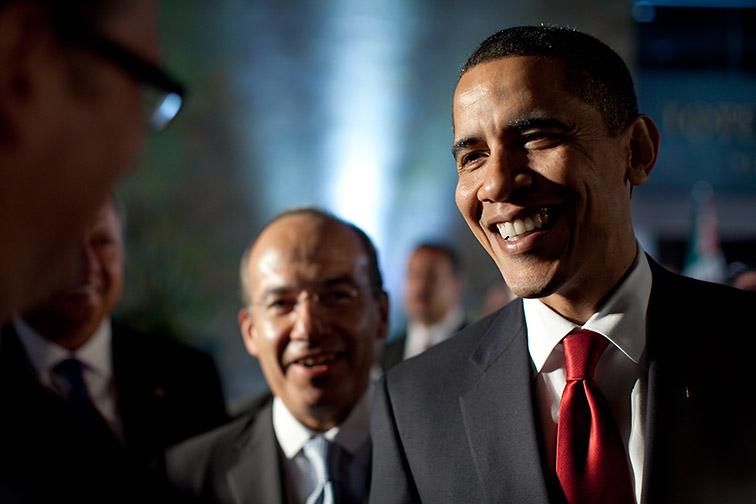
Presidencia de la Nacion Argentina · CC BY-SA 2.0
Felipe de Jesús Calderón Hinojosa (born 18 August 1962) is a Mexican politician and lawyer who served as the 63rd president of Mexico from 2006 to 2012. A member of the National Action Party (PAN) for 30 years, he also served as Secretary of Energy under President Vicente Fox. His presidency is most noted for declaring war on drug cartels shortly after taking office and for navigating the Great Recession.
- born
- 18 August 1962, Morelia, Michoacán, Mexico
- nationality
- Mexican
- known_for
- 63rd President of Mexico; declaration of war against drug cartels; controversial
Verified Timeline
Lore & Background
Calderón was born in Morelia, Michoacán, the youngest of five children. His father, Luis Calderón Vega, was a co-founder of the National Action Party. Calderón joined the PAN as a young man, distributed pamphlets for his father's campaigns, and later earned a law degree from the Escuela Libre de Derecho, a master's in economics from ITAM, and a Master of Public Administration from Harvard's Kennedy School in 2000. He met his wife, Margarita Zavala, within the party; they have three children: María, Luis Felipe, and Juan Pablo. He is Roman Catholic.
Reader's Guide
Calderón's presidency (2006–2012) was shaped by two major crises: the drug war and the Great Recession. Ten days after taking office, he declared war on drug cartels, deploying federal forces in Operation Michoacán. Official drug-war deaths reached 60,000 during his term, and homicides peaked in 2010 before declining. The Great Recession led to a countercyclical package that raised national debt from 22.2% to 35% of GDP; poverty rose from 43% to 46%. His 2006 election victory over Andrés Manuel López Obrador was disputed, with a 0.6% margin and calls for a recount, but was confirmed by the Federal Electoral Tribunal. Other achievements include establishing ProMéxico in 2007, criminal justice reforms passed in 2008, the Mexican Space Agency in 2010, the Pacific Alliance in 2011, and achieving universal healthcare via Seguro Popular in 2012. Sixteen new Protected Natural Areas were created under his administration. After leaving office, Calderón quit the PAN in November 2018 and attempted to found a new party, México Libre, which was rejected by the INE. In 2023, his former security secretary Genaro García Luna was convicted of drug trafficking, and a poll found 84% of respondents wanted an investigation into Calderón.
Did You Know?
- Calderón's father, Luis Calderón Vega, was a co-founder of the National Action Party (PAN).
- He earned a Master of Public Administration from Harvard's Kennedy School in 2000.
- His 2006 election victory margin was just 0.6% of total votes.
- Official drug-war deaths during his presidency reached 60,000.
- He quit the PAN in November 2018 after 30 years of membership.
The Narrowest Mandate: The 2006 Presidential Election
Felipe Calderón's path to the presidency was one of the most contested in modern Mexican history. As the National Action Party's candidate in 2006, he faced a fiercely polarized campaign against Andrés Manuel López Obrador of the PRD. The Federal Electoral Institute ultimately declared Calderón the winner by a razor-thin margin of just 0.6 percent of total votes cast. López Obrador and his party rejected the outcome, demanding a full recount of every ballot. The dispute dragged on for months before the Federal Electoral Tribunal ultimately validated Calderón's victory. The controversy surrounding the election's conduct and the narrowness of the result cast a long shadow over his presidency from the very start, with many observers questioning whether the legitimacy of his mandate was fully secured. This contentious origin would haunt his administration throughout its six-year span, as critics frequently pointed back to the disputed vote as evidence that his authority remained incomplete and contested.
War on the Cartels and the Human Cost
Just ten days after inaugurating as Mexico's 63rd president in 2006, Calderón declared a war against the country's drug cartels, a move many analysts interpreted as an attempt to shore up popular legitimacy following the disputed election. His approval of Operation Michoacán marked the first major deployment of federal military forces against organized crime groups. The consequences were staggering: by the end of his term, an official count recorded 60,000 deaths directly linked to the drug war. Homicide rates climbed sharply in the early years of his presidency, reaching their peak in 2010 before gradually declining during his final two years. The legacy of this security strategy resurfaced years later when, in 2019, his former Secretary of Public Security, Genaro García Luna, was arrested in the United States on charges linking him to the Sinaloa Cartel. García Luna was convicted on all counts in February 2023, and a senior military figure under Calderón publicly stated that the president had been aware of García Luna's cartel connections. A poll conducted that same month revealed that 84 percent of respondents wanted a formal investigation into Calderón himself.
Institutional Reforms and Economic Crossroads
Calderón's six-year tenure coincided with the global Great Recession, forcing his government to adopt a countercyclical fiscal package in 2009 that pushed Mexico's national debt from 22.2 percent to 35 percent of GDP by December 2012. The poverty rate also edged upward, rising from 43 to 46 percent over the period. Yet his administration achieved several landmark institutional milestones. In 2007, he established ProMéxico, a public trust fund dedicated to advancing Mexico's interests in international trade and investment. The criminal justice reforms passed in 2008, though not fully implemented until 2016, represented a fundamental restructuring of the legal system. He also oversaw the creation of the Agencia Espacial Mexicana in 2010, the founding of the Pacific Alliance in 2011, and the achievement of universal healthcare coverage through Seguro Popular in 2012. Sixteen new Protected Natural Areas were designated under his watch, and the 2009 swine flu pandemic tested his government's public health response on a global stage.
A Political Dynasty and a Life Beyond the Presidency
Born in Morelia, Michoacán, on August 18, 1962, Felipe Calderón grew up immersed in the National Action Party. His father, Luis Calderón Vega, co-founded the PAN and served as a federal deputy and in state posts. Young Felipe spent his boyhood distributing party pamphlets, riding in campaign vehicles, and chanting slogans at rallies. He later earned a law degree from the Escuela Libre de Derecho in Mexico City, a master's in economics from ITAM, and a Master of Public Administration from Harvard's Kennedy School in 2000. Within the PAN he met his wife, Margarita Zavala, a fellow federal deputy; together they raised three children—María, Luis Felipe, and Juan Pablo. A Roman Catholic who identified as pro-life, Calderón nonetheless backed legislation permitting abortion in cases of rape, danger to the mother's life, or severe fetal deformity, and publicly supported decriminalizing small drug quantities for registered addicts. He left the PAN in November 2018 after thirty years of membership and completed a one-year Kennedy School fellowship in early 2013 before returning to Mexico.
Gallery
Frequently Asked Questions
Who is Felipe Calderón?
Felipe de Jesús Calderón Hinojosa, born in Morelia, Michoacán on 18 August 1962, is a Mexican lawyer and politician who held the 63rd presidency of Mexico from 2006 to 2012. He spent roughly three decades as a member of the National Action Party (PAN) before reaching the top office.
What is Felipe Calderón most known for?
His presidency is defined by two landmark decisions: launching a military campaign against drug cartels almost immediately after taking office and steering Mexico through the global Great Recession. Both choices remain hotly debated in Mexican political discourse to this day.
What role did Felipe Calderón hold before becoming president?
Prior to his 2006 election, Calderón served as Secretary of Energy under President Vicente Fox and had long been a prominent figure inside the PAN party. His legal training and energy-sector experience shaped much of his policy approach once he reached the presidency.
Why was Felipe Calderón's 2006 election so controversial?
His victory over Andrés Manuel López Obrador was extremely narrow, sparking widespread allegations of vote manipulation and protests that persisted well into his first months in office. The disputed result cast a shadow over his entire six-year term and remains a reference point in Mexican electoral history.
How is Felipe Calderón's legacy viewed in Latin American politics?
He is widely regarded as a polarizing figure whose anti-cartel strategy fundamentally reshaped Mexico's security landscape while also intensifying violence across the country. His tenure is frequently cited when discussing the trade-offs between state authority and public safety in the region.
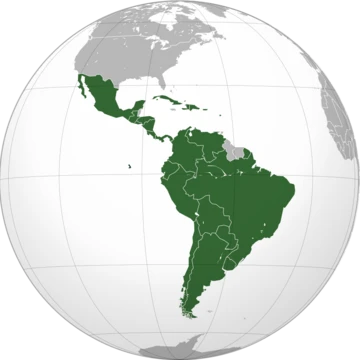
More in Latin American Presidents 1-24
Elsewhere in the Latin American Presidents universe
Spotted an error? Know more?
This is a living reference — every entry is fact-audited, and reader corrections feed straight into our audit queue. Suggest an edit · See this site's audit record