Fernando Belaúnde
Peruvian president deposed by coup, later re-elected after military rule.

El Surquillano · CC0
Fernando Sergio Marcelo Marcos Belaúnde Terry (7 October 1912 – 4 June 2002) was a Peruvian politician who twice served as President of Peru, first from 1963 to 1968 and again from 1980 to 1985. His first term ended when he was deposed by a military coup; after twelve years of military rule, he was re-elected in 1980. Belaúnde was a trained architect and founded the center-right Acción Popular party, promoting developmental projects and a doctrine called 'The Conquest of Peru by Peruvians.'
- born
- 7 October 1912
- died
- 4 June 2002
- field
- Politics, Architecture
- nationality
- Peruvian
- known_for
- Twice President of Peru (1963–1968, 1980–1985); founder of Acción Popular; depos
Verified Timeline
Lore & Background
Fernando Belaúnde was born in Lima into a wealthy aristocratic family with a history of political service. His father Rafael served as Prime Minister under José Bustamante y Rivero, his paternal grandfather Mariano Andrés Belaunde was a Finance Minister, and one of his great-grandfathers, Pedro Diez Canseco, was also President of the Republic. During the dictatorship of Augusto B. Leguía, persecution for the political activities of his father and uncle prompted the family to move to France in 1924, where Belaúnde attended high school and received his initial university education in engineering. From 1930 to 1935, he studied architecture in the United States, first at the University of Miami (where his father was teaching) and then transferring in 1935 to the University of Texas at Austin, where he obtained his degree in architecture. He became pro-American and very proficient in English, with some referring to him as 'Fred Blundy.'
Belaúnde's political career began in 1944 as cofounder of the National Democratic Front party, which elected José Bustamante as president in 1945; he served in Congress until a coup by General Manuel Odría in 1948. In 1956, after the Odría dictatorship called for elections, he led the slate of the 'National Front of Democratic Youth.' On June 1, 1956, after the election board refused his candidacy, he led a protest known as the 'manguerazo' (hosedown) from the water cannons used by police. When confrontation threatened violence, Belaúnde calmed the crowd and, armed solely with a Peruvian flag, crossed alone to deliver an ultimatum to the police chief. The government capitulated, and the image was featured by Caretas magazine in an article titled 'Así Nacen Los Líderes.' In July 1956, he founded the center-right Acción Popular party in Chincheros, Cuzco. In 1959, after defying a ban on his party's convention, he was arrested and jailed for 12 days on the island prison of El Frontón, where he attempted an unsuccessful escape by swimming. He ran for president in 1962, finishing second by less than 14,000 votes; after allegations of fraud, a military junta took over and held new elections in 1963, which Belaúnde won by a five percent margin. During his first presidency (1963–1968), Belaúnde spurred numerous developmental projects under his doctrine 'The Conquest of Peru by Peruvians,' including the Carretera Marginal de la Selva highway linking Chiclayo to the Amazon regions. In 1964, his administration targeted the Matsés indigenous group after two loggers were killed, with the Peruvian armed forces using aircraft to drop napalm on the Matsés, who were armed only with bows and arrows, killing hundreds. He also advanced irrigation and hydroelectric projects, established the Peruvian National Bank (Banco de la Nación), promoted 'social interest' homes benefiting tens of thousands of families, gave legal recognition to hundreds of indigenous communities, and expanded the hospital network and social security coverage. However, by 1967 the sol had become seriously devalued. In August 1968, his administration announced a settlement with Standard Oil of New Jersey over the La Brea and Pariñas oil fields. Widespread anger over the compensation and a missing page (page 11) from the agreement document forced his cabinet to resign on October 1. The missing page was later shown on television containing the contribution Belaúnde had promised to pay. Several days later, he was removed by a military coup led by General Juan Velasco Alvarado. Belaúnde spent the next decade in the United States, teaching at Harvard, Johns Hopkins, and George Washington University. He was re-elected in 1980 after twelve years of military rule.
Reader's Guide
Fernando Belaúnde's significance lies in his two non-consecutive presidencies, which bookended a period of military rule in Peru. His first term (1963–1968) was marked by ambitious infrastructure projects aimed at integrating the Amazon and other regions, but also by controversial actions such as the use of napalm against the Matsés indigenous group in 1964. His administration's handling of the La Brea and Pariñas oil dispute with Standard Oil led to a political crisis—the missing page 11 of the settlement document became a cause célèbre—and his overthrow in a 1968 coup led by General Juan Velasco Alvarado. After twelve years of military government, Belaúnde was re-elected in 1980, demonstrating his enduring political appeal. He founded the Acción Popular party in 1956, positioning it between the pro-oligarchy right and the radical left. His legacy includes developmental achievements like the Carretera Marginal de la Selva highway, the Banco de la Nación, and social housing programs, as well as the unresolved tensions of his first term and his role in restoring democratic governance after military rule.
Did You Know?
- Belaúnde's full name was Fernando Sergio Marcelo Marcos Belaúnde Terry.
- During the 1956 'manguerazo' protest, he walked alone with a Peruvian flag to deliver an ultimatum to the police chief, forcing the government to accept his candidacy.
- In 1959, he was jailed for 12 days on the island prison of El Frontón and attempted an unsuccessful escape by swimming.
- In 1964, his administration used napalm dropped from aircraft against the Matsés indigenous group, who were armed only with bows and arrows, killing hundreds.
- The missing page 11 of the Standard Oil settlement document became a cause célèbre and was later shown on television.
Gallery
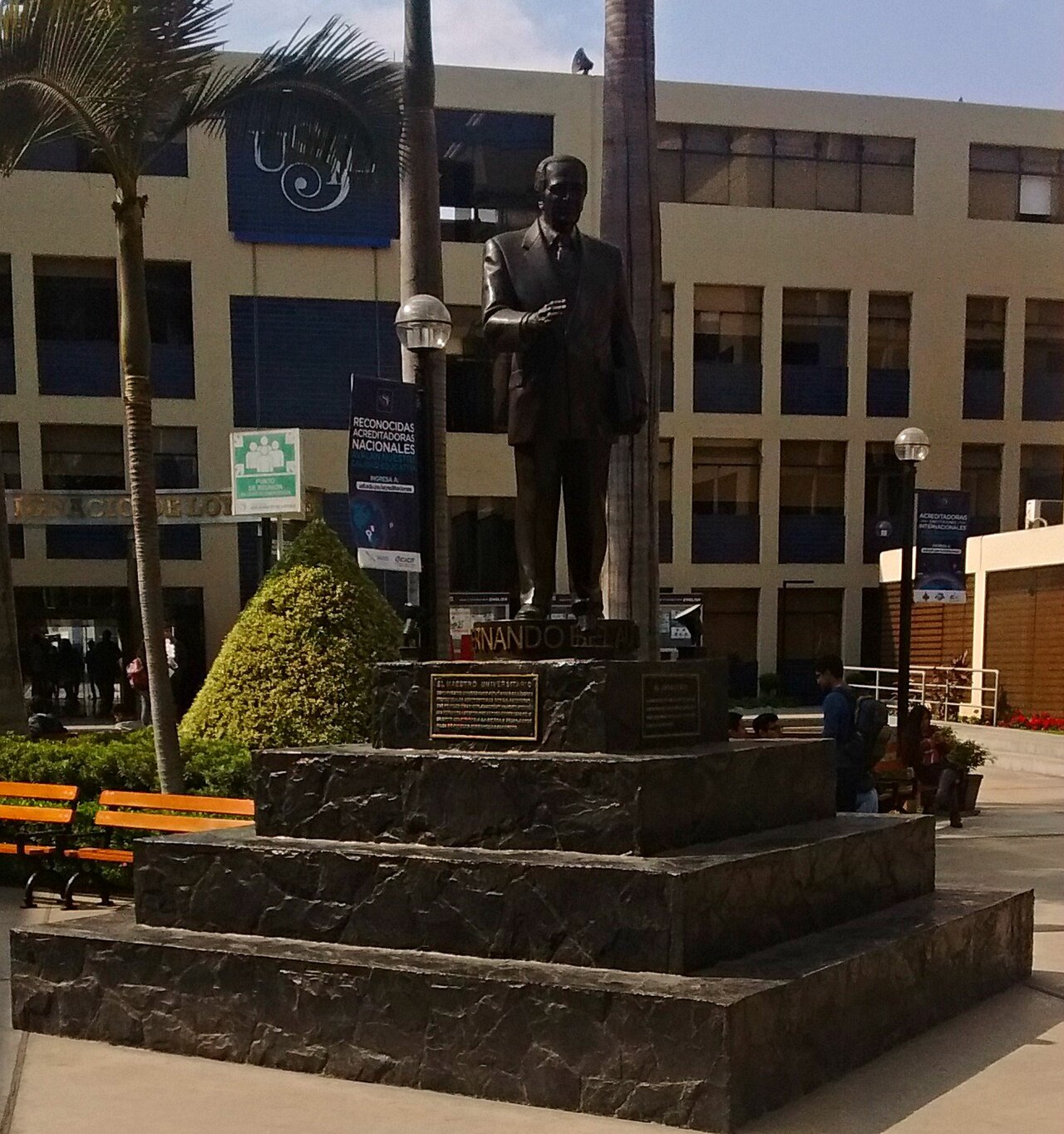
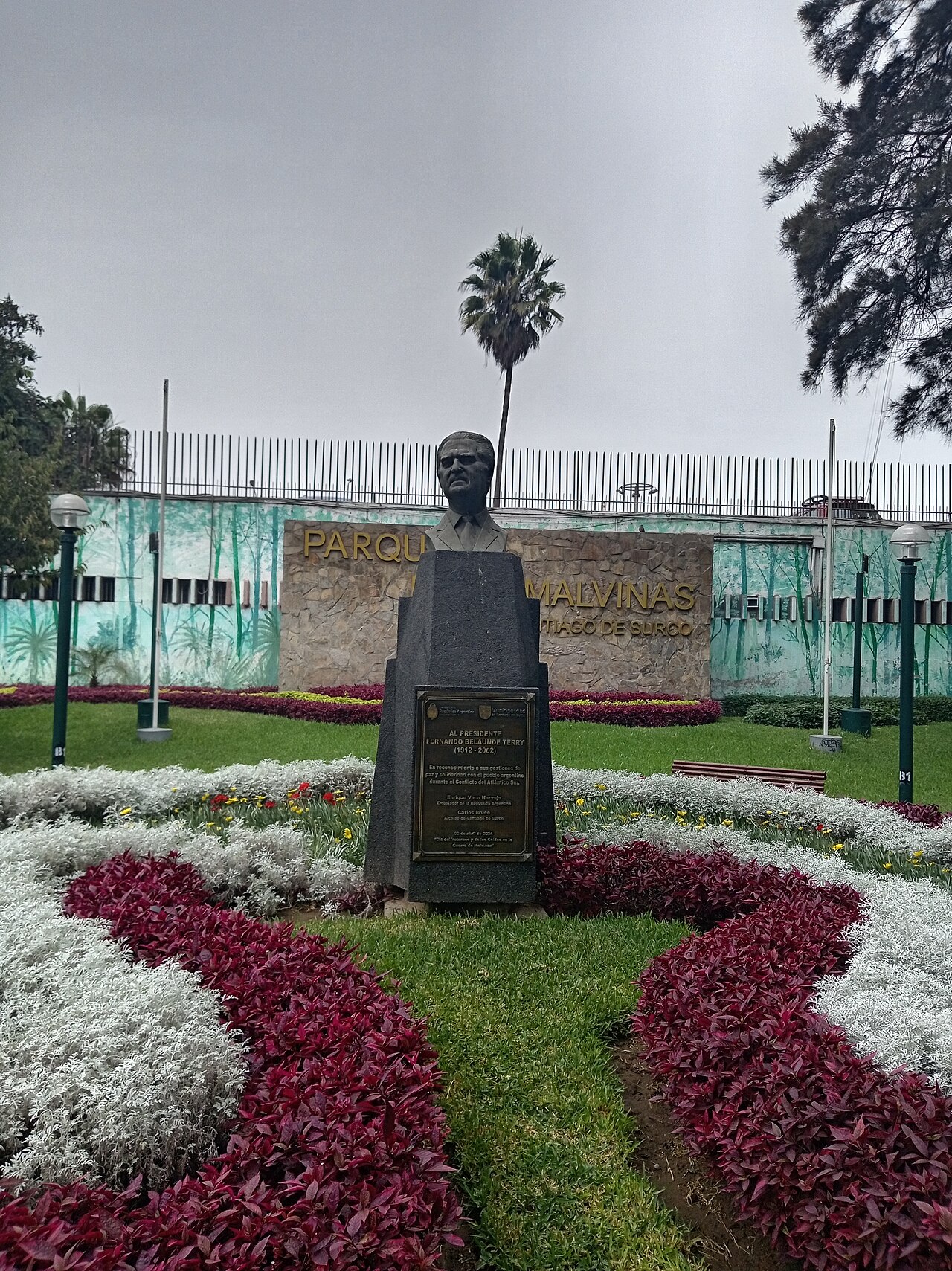
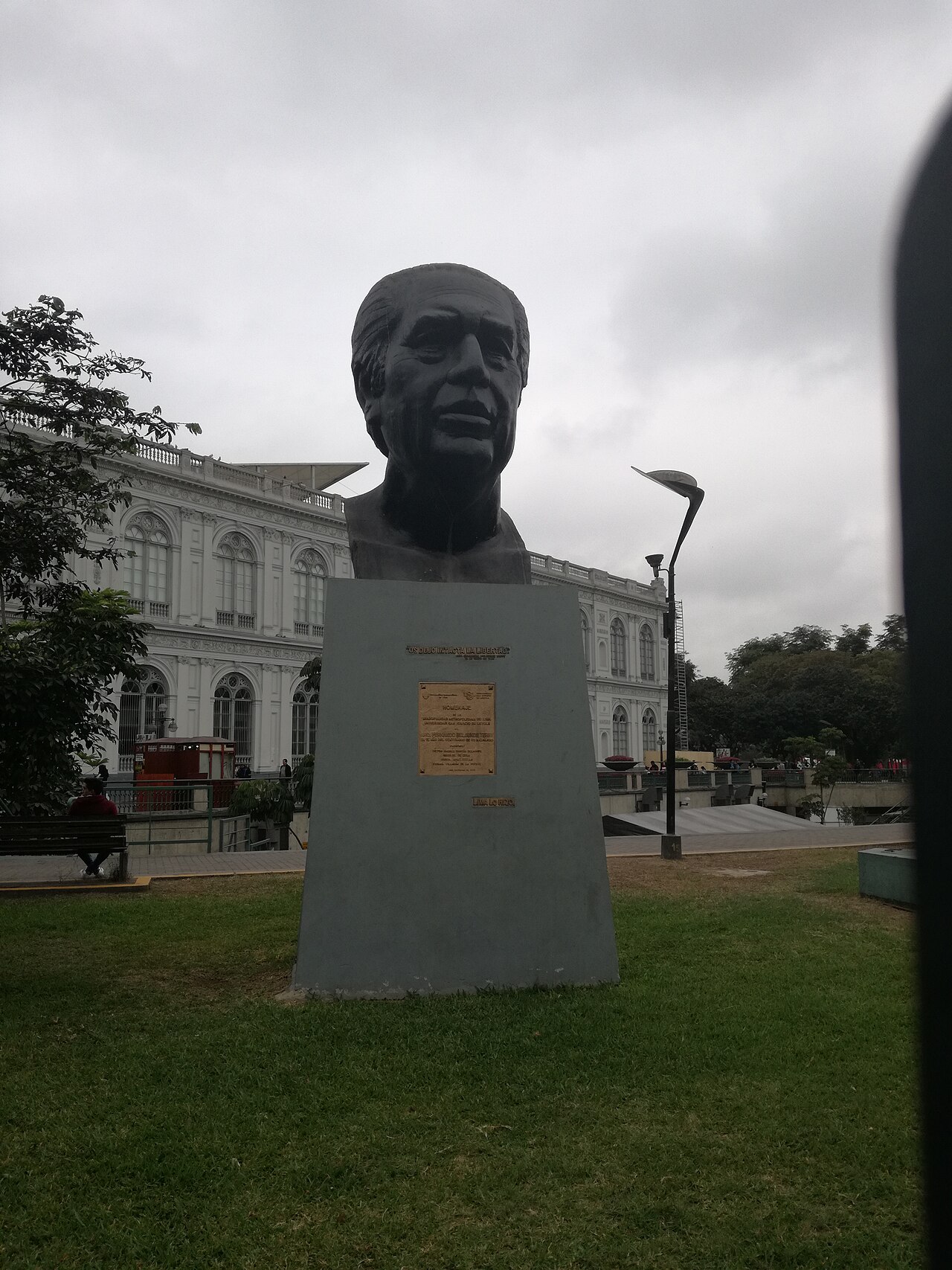
Frequently Asked Questions
Who was Fernando Belaúnde Terry?
Fernando Belaúnde Terry (1912–2002) was a Peruvian statesman who held the presidency twice, first from 1963 to 1968 and then again from 1980 to 1985. He is also remembered as the founder of the center-right Acción Popular party and as a trained architect before entering public life.
How did Fernando Belaúnde lose his first term as president?
His initial presidency was cut short in 1968 when the military staged a coup and removed him from office. He spent the next twelve years in opposition while Peru remained under armed-rule governance.
What was Fernando Belaúnde's political doctrine?
He championed a philosophy he called 'The Conquest of Peru by Peruvians,' which emphasized national self-reliance and large-scale developmental projects carried out by Peruvians themselves rather than foreign actors. This vision anchored the platform of the Acción Popular party he created.
What was Fernando Belaúnde's profession before he became a politician?
Belaúnde was professionally trained as an architect, a background that informed his later focus on infrastructure and urban-development programs during his presidencies.
How did Fernando Belaúnde return to the presidency after being overthrown?
Following twelve years of military rule, Peru returned to civilian elections in 1980, and Belaúnde won the ballot to serve a second, full term. His comeback made him one of the few Latin American leaders to reclaim the top office after a coup.
More in Latin American Presidents 1-24
Elsewhere in the Latin American Presidents universe
Spotted an error? Know more?
This is a living reference — every entry is fact-audited, and reader corrections feed straight into our audit queue. Suggest an edit · See this site's audit record